
How to Find a Lincoln County Property Owner
Start with the parcel. Lincoln County's Real Estate and Tax Data Search accepts a parcel ID or street details. A street address usually leads somewhere. The GIS map helps orient a parcel and publishes an owner-name search alongside it. The Register of Deeds is the last stop. It shows who appears as grantee on a recorded deed. A missing field on a search card is a question for the custodian. Guesswork should never fill the gap.
- Search the address or parcel ID in the county land and tax system and save the exact parcel number.
- Check the municipality, situs address, mailing address, and any owner field shown on the result.
- Search the Register of Deeds by party name or tract and compare the newest deed's legal description.
- If an entity is grantee, use the official Wisconsin DFI corporate records channel to identify its registered details; a direct URL was not verified in the research.
- Ask the custodian to confirm an unclear record rather than treating an address or entity agent as the property owner.
Start with a Lincoln County Parcel
Enter a parcel ID or street information, but not both. That is the county's advice. The posted example ID, 25131061820100, carries no dashes. For a street search, keep a prefix such as N5569 in the Street Number field. Pick the street name from autocomplete rather than typing it freely. These small format rules cut the odds of a false no-result.
Rural locations complicate things. When the fire number is unclear, the mapping portal documents its Fire Number Locator and Locate Address in Range tools. Use the map to select the parcel. Then carry its PIN and legal description into the ownership check. A postal city label never settles whether the land sits in city, town, or county zoning.
Lincoln County Sources for Ownership
Ownership data lives in separate Lincoln County systems. The Real Property Lister maintains the ownership and assessment roll. The Register of Deeds holds the recorded transfer instruments. GIS links a tax parcel to its location and can feed a property report. The owner may turn out to be a company. Wisconsin's business registry can clarify the named entity.
| Source | Owner Info It Gives | Access |
|---|---|---|
| Real Property Lister | County ownership and assessment information; inspect the live card for exact fields. | Free land and tax search; office phone 715-539-1055 |
| Register of Deeds | Recorded grantee, instrument, and legal description. | Tapestry EON or agreement-based Laredo |
| GIS mapping portal | Parcel geometry and an advertised owner-name search mode. | Free mapping portal |
| Wisconsin DFI | Entity name, status, agent, address, and filings when available. | Official corporate records search; direct link not verified |
An owner of record is the person or entity named in a public land record. That says nothing about who occupies the building. The county's search landing page shows no card, so confirm the owner and mailing fields in a live result before writing them into a file.
Use the systems in sequence. The free land and tax search identifies a parcel and describes its ownership and assessment information. GIS advertises an Owner Name search and can point to parcel geometry or a report. The Register of Deeds records the instrument in which a grantee received an interest. Keep a note of which source supplied each name. No single name deserves equal weight on its own.
A blank GIS search proves nothing. Punctuation, an entity suffix, a trust, a joint owner, or a recent filing can each change the result. Try reasonable name variants. Confirm every candidate with its PIN and legal description. An owner field missing from the current roll is a question for the Real Property Lister. A directory or commercial summary is no substitute for the official parcel record.
Lincoln County Owner and Mailing Address
Two addresses attach to most parcels. The situs address is where the property sits. The mailing address is where tax correspondence goes. An out-of-county mailing location can appear on a Lincoln County parcel record. An agent address can appear there too. Neither is a verified residence or an invitation to contact someone.
Compare the owner, mailing address, parcel PIN, and legal description against the latest deed. An LLC, trust, or estate may appear in the record. Copy the legal entity name exactly. A personal name associated with that entity is not the recorded grantee. The situs and mailing values can diverge without indicating any error. Owners often live elsewhere. They may also route mail through an agent or estate address.
Near Merrill or Tomahawk, preserve the postal city on the envelope. Verify the county municipality and tax district separately. City and town names can overlap. Permit and zoning rules follow the parcel's jurisdiction, not the label on the mail.
Confirm the Lincoln County Deed
Confirming ownership means checking the deed itself. Lincoln County's Register of Deeds opens its grantor and grantee indexes through Tapestry EON. Laredo offers the same indexes. Search by the owner name on the parcel. Add the land description. Then match the newest instrument to that same property. The county posts new documents the next working day. Equipment problems and filing volume can push that date back. A closing can therefore appear in the deed index. The assessor card may still show the prior owner.
For a fresh transfer, note the date and reference on the filed deed. If anything looks unclear, order the actual image or a certified copy from the custodian. The Lincoln County deed record access details walk through the search and copy channels.
Lincoln County LLC and Estate Owners
A deed does not always name a person. Lincoln County instruments often list a limited liability company, a trust, a personal representative, or an estate as the grantee. Begin with the exact vesting language. Pair it with the full legal description of the parcel. For an LLC, Wisconsin's Department of Financial Institutions can confirm the exact legal name and its registered agent. That filing contact is not proof the agent owns the land. Corporate records also do not name beneficial owners. The parcel's owner of record rests on the deed.
Probate can extend the trail. An estate may add an inventory, a court order, or a certificate of descent to the record. A will alone does not show how title moved. Match the probate file against the recorded transfer instrument and the parcel description before treating a family name as the current owner. A probate docket proves an estate exists. It does not prove a particular parcel transferred. For that, find the deed, certificate, or judgment tied to the legal description.
When an owner dies, a death record can corroborate identity or the date. The Register of Deeds and Register in Probate hold different pieces of that trail. If the assessor still shows the decedent, ask whether a later filed transfer has reached the tax roll. Keep the reference numbers from both offices.
Limits of a Lincoln County Ownership Lookup
A Lincoln County tax roll or deed index names the parties and filings of record. It cannot say who lives at an address. It settles no boundary. Nor does it promise a complete title chain. Wisconsin's Safe at Home program can also keep a participant's address confidential, and the state DOJ warns that owning a home creates special challenges for those enrolled. A participant should ask the program about property-record limits before assuming a deed or tax parcel can be hidden.
Lawful use. Use owner information for property research, transfer checks, boundary questions, or civic work. Do not use a name or address to stalk, threaten, or harass a person.
MyVote Is Not a Property Owner List
MyVote answers one question only. Wisconsin's service lets a registrant look up their own record with a full name and date of birth. It is not a public roster of owners. Bulk requests go through a separate Elections Commission process. A voter record should never fill a gap in an assessor card or deed result. Open MyVote Wisconsin's voter information page and the self-lookup prompt makes the voter purpose plain, while property ownership still has to be confirmed in county land records.
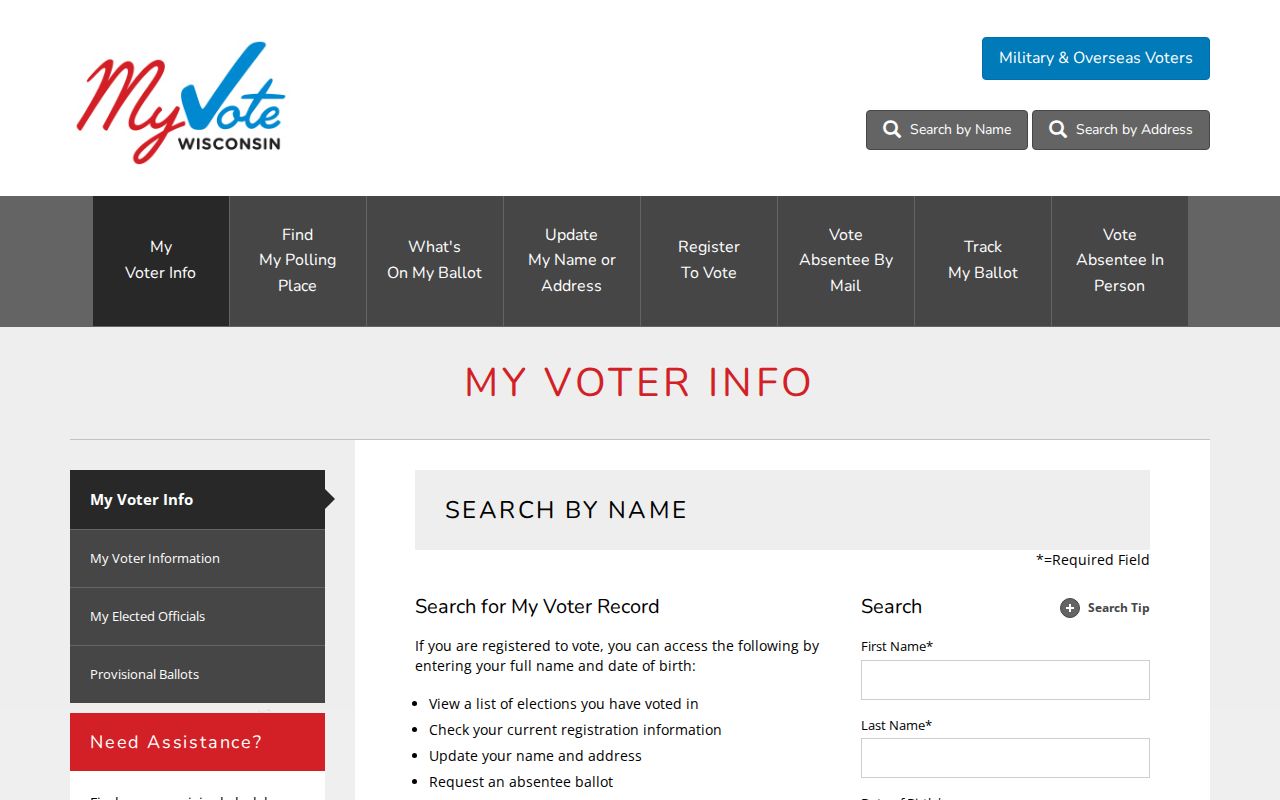
That boundary keeps ownership answers with the right custodian. A public voter database simply is not evidence of who holds title to Lincoln County land.